Editorial Picks
Five Royal Palaces You Cannot Miss in Seoul
The four surviving Joseon palaces inside the old city walls and the Confucian royal shrine that completes the circuit — Gyeongbokgung, Changdeokgung, Deoksugung, Changgyeonggung, Jongmyo, two of them UNESCO World Heritage.
Seoul still operates inside a heritage geography that the Joseon dynasty (1392 to 1910) effectively designed five centuries ago. The four royal palaces that survive inside the old Hanseong city walls, together with the Confucian royal shrine of Jongmyo, anchor the cultural centre of the modern city and remain reachable within a single Subway Line 3 day for a visitor based in Myeongdong, Gwanghwamun, or Bukchon. The five sites are not interchangeable. Gyeongbokgung is the dynasty's primary palace and the most internationally recognised; Changdeokgung is the UNESCO World Heritage palace whose rear garden, Huwon, is widely treated as the finest Korean palatial-garden composition; Deoksugung uniquely combines traditional Korean and Western-style architecture and is the closest palace to the central Seoul hotel cluster; Changgyeonggung functions as the quieter sister palace to Changdeokgung and pairs with it through the Hamyangmun gate; Jongmyo, listed by UNESCO in 1995 (two years before Changdeokgung's 1997 inscription), is the Confucian royal shrine where the ancestral tablets of the Joseon kings are housed and where the Jongmyo Jerye royal ancestral ritual is performed. The five together make a heritage circuit that is denser and more legible than the equivalent in almost any other Asian capital, and the standard editorial guidance is to weight a Seoul trip across at least three of the five rather than attempt all five in a compressed window. The Featured A through E labels below indicate position on the circuit, not a ranking. Each site is documented through the Cultural Heritage Administration of Korea, the Royal Palaces and Tombs Centre, the UNESCO World Heritage Centre where applicable, and the Visit Seoul attractions database, with sources noted on each entry.
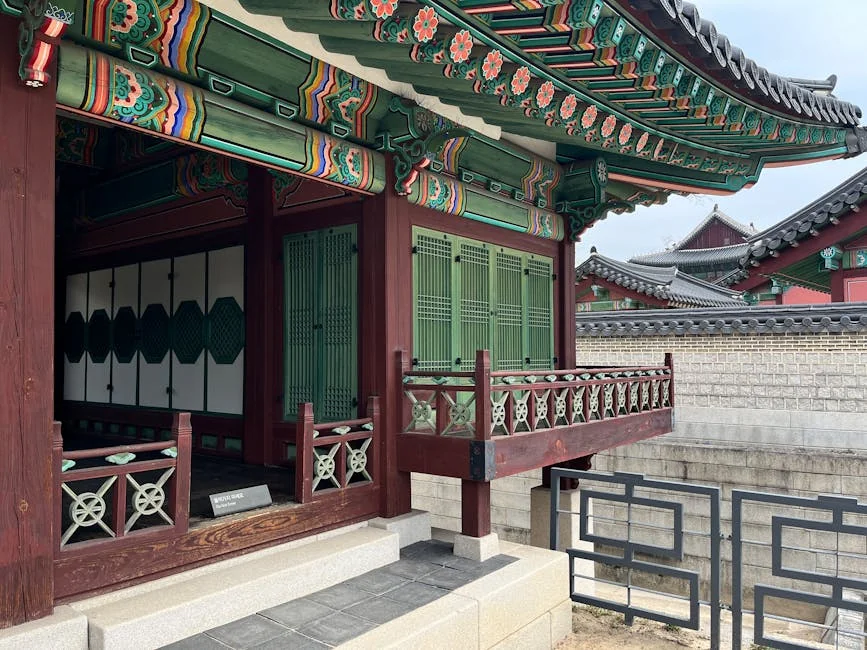
What defines a Joseon royal palace and why five remain in Seoul
A Joseon royal palace is a walled palace complex built between 1395 and the mid-1600s as a residence and audience hall for the Joseon king, structured around a fixed sequence of throne hall, residential quarters, royal kitchens, and an interior or rear garden. The Joseon dynasty operated a multi-palace system rather than a single principal residence: Gyeongbokgung was the principal palace from its 1395 founding under King Taejo, but court ritual, succession events, fire reconstruction cycles, and political consolidation moved the principal-palace function repeatedly across the dynasty's five-century reign. Five palaces survive in Seoul today inside the old Hanseong city walls. Gyeongbokgung was reconstructed substantially from 1867 after Japanese-occupation-era damage and continues to undergo phased restoration under the Cultural Heritage Administration. Changdeokgung was the principal palace through much of the seventeenth century after a Gyeongbokgung fire and is the best-preserved palace today. Deoksugung was reconstructed and expanded in the late 1890s to early 1900s under Emperor Gojong and uniquely incorporates Western-style buildings (Seokjojeon) alongside its traditional Korean halls. Changgyeonggung is structurally connected to Changdeokgung through the Hamyangmun gate and historically operated as the queen-mother's palace. Jongmyo is technically a royal Confucian shrine rather than a palace but is the heritage site that completes the dynastic ritual landscape and is treated as part of the standard five-stop Seoul royal circuit. Two of the five sites — Changdeokgung in 1997 and Jongmyo in 1995 — hold UNESCO World Heritage status under the World Heritage Centre's Korean inscriptions.
- Five surviving palaces and shrines inside the old Hanseong city walls
- Gyeongbokgung — principal palace, founded 1395, reconstructed 1867
- Changdeokgung — UNESCO 1997, best-preserved, Huwon rear garden
- Deoksugung — late-Joseon expansion, unique Western-style Seokjojeon
- Changgyeonggung — Hamyangmun-connected sister palace to Changdeokgung
- Jongmyo — UNESCO 1995, Confucian royal shrine of the Joseon kings
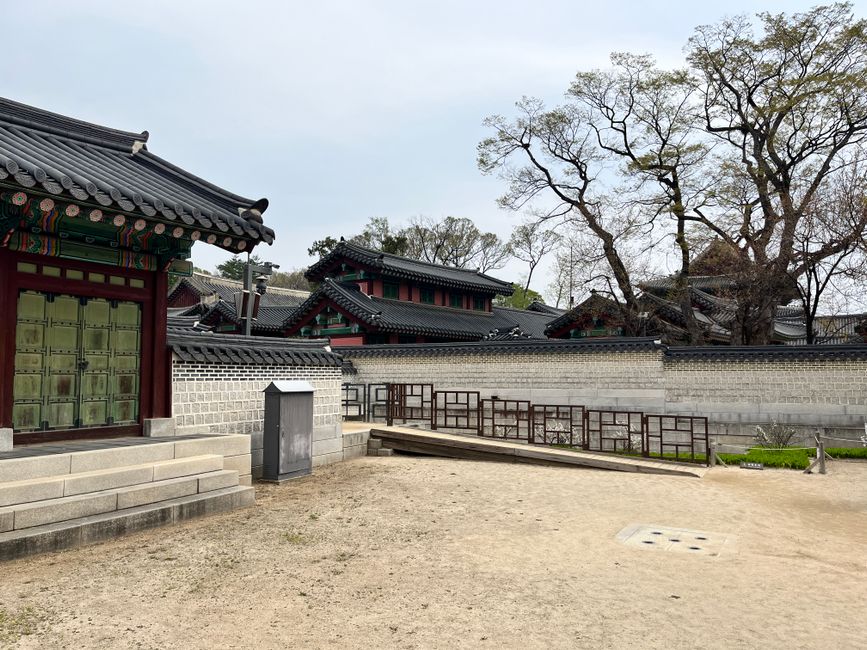
Five royal palaces and the Confucian shrine that completes the circuit
Featured picks A through E, organised in the standard editorial order that the Cultural Heritage Administration, Visit Korea, and Visit Seoul use across their official itineraries — Gyeongbokgung first as the principal palace and the changing-of-the-guard anchor, Changdeokgung second as the UNESCO World Heritage centrepiece, Deoksugung third as the central-Seoul accessible visit, Changgyeonggung fourth as the Changdeokgung pair, and Jongmyo fifth as the Confucian shrine that completes the dynastic landscape. Not ranked.
Featured A — Gyeongbokgung Palace (Jongno-gu)
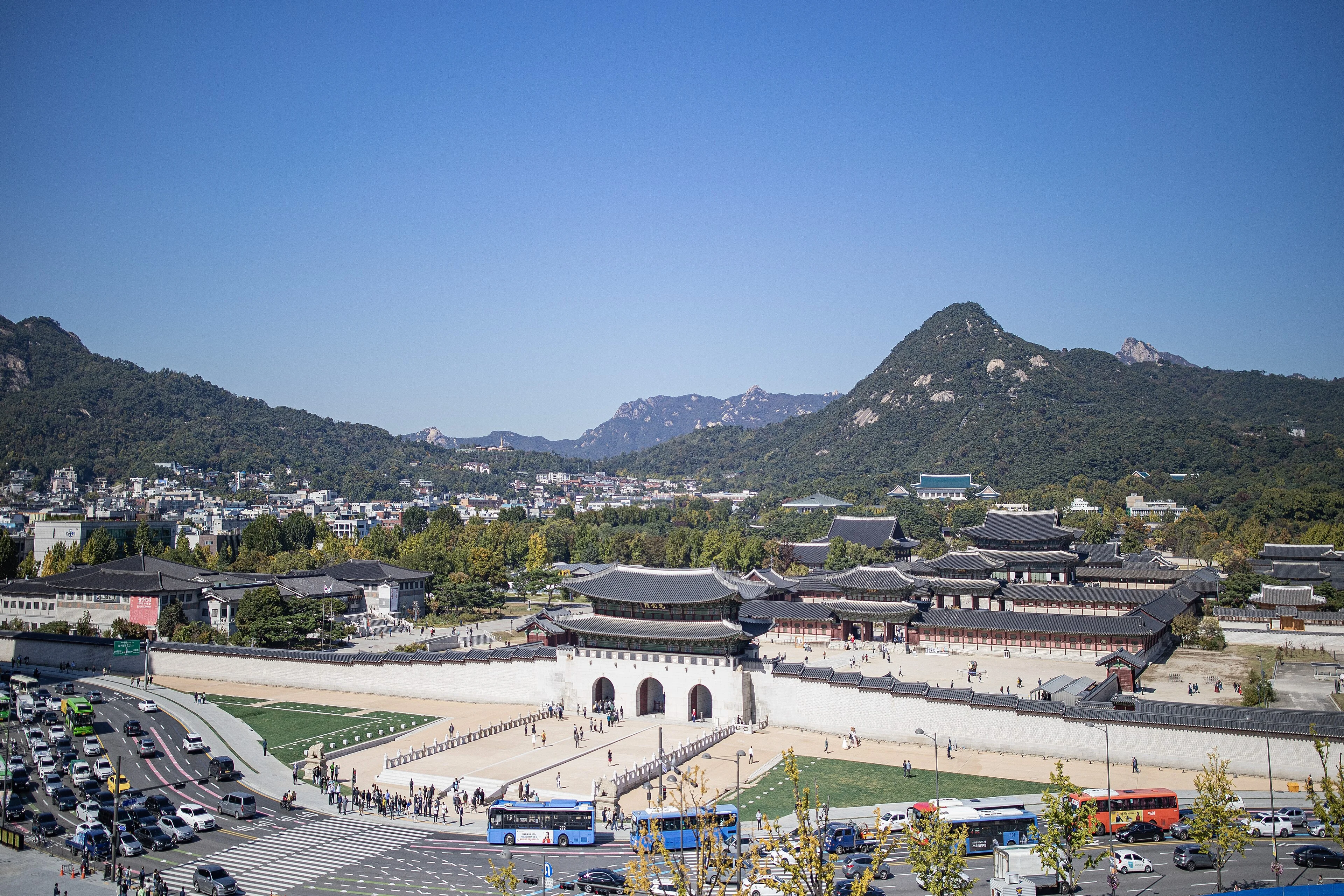
Gyeongbokgung Palace at 161 Sajik-ro in Jongno-gu is the principal palace of the Joseon dynasty, founded by King Taejo in 1395, destroyed in the 1592 Japanese invasions, reconstructed substantially under Regent Heungseon Daewongun from 1867, and the most internationally recognised heritage building in Korea. The palace covers a substantial grid behind Gwanghwamun gate and the National Folk Museum of Korea sits on its grounds. Standard admission is 3,000 won and visitors wearing hanbok (traditional Korean dress) enter free, which is the documented basis for the rental-hanbok industry that has emerged along the palace approach roads. The royal guard changing ceremony at Gyeongbokgung is performed twice daily, at 10:00 and 14:00, and is the most reliable heritage spectacle on the Seoul circuit. Hours run 09:00 to 18:00 from March through May and September to October, 09:00 to 18:30 from June through August, and 09:00 to 17:00 from November to February; the palace is closed on Tuesdays. English-language guided tours are scheduled daily and Mandarin and Japanese guides are documented in the Visit Korea coverage. Gyeongbokgung is the standard first palace for visitors with one heritage day and is also the visual icon that recurs across Korean tourism photography.
Featured B — Changdeokgung Palace and Huwon (Jongno-gu)
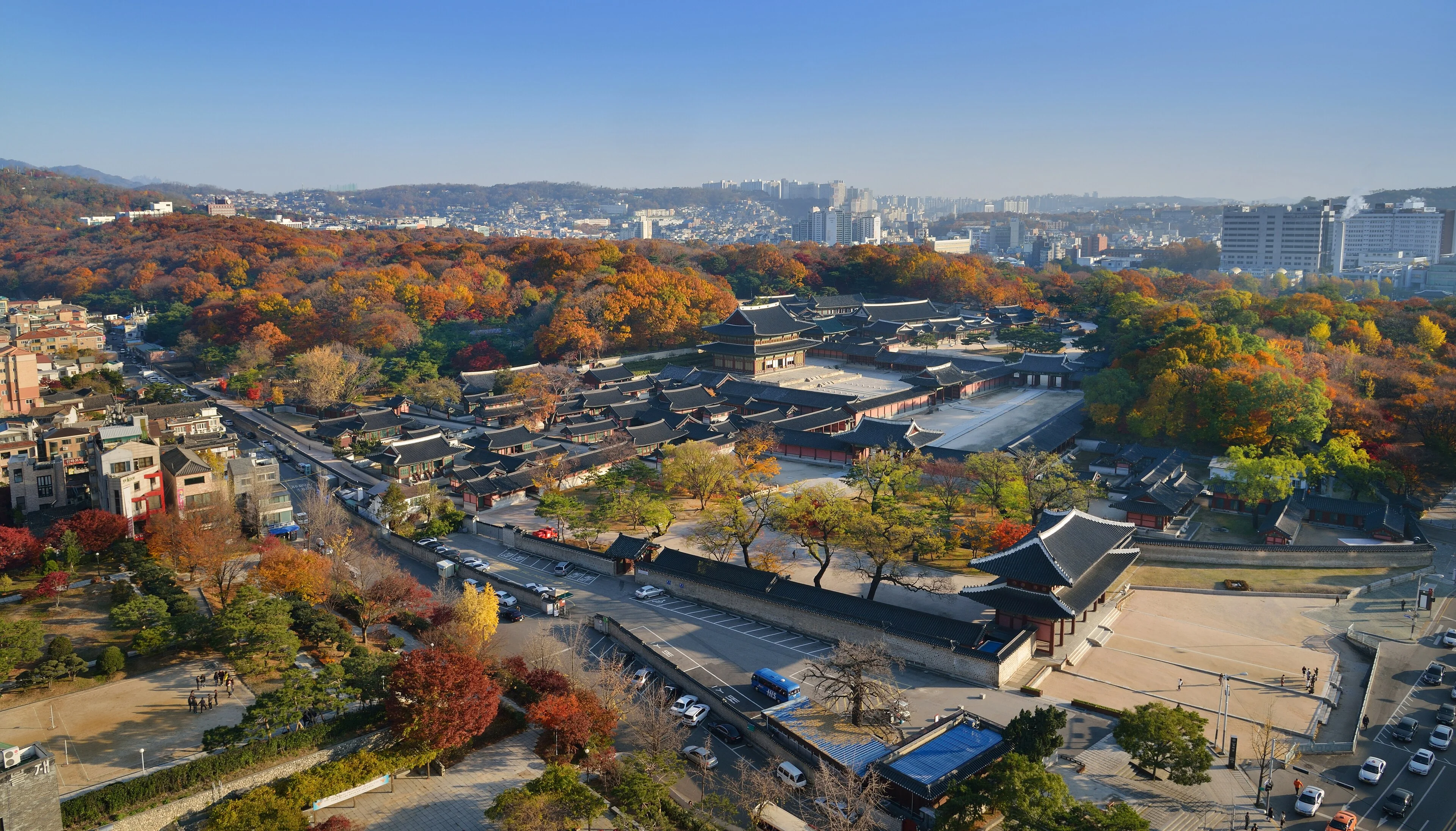
Changdeokgung Palace at 99 Yulgok-ro in Jongno-gu is the UNESCO World Heritage palace inscribed in 1997, the best-preserved of the five Joseon palaces, and the palace whose rear garden, Huwon (the Secret Garden), is widely treated by Korean and international heritage press as the finest royal palatial-garden composition in Korea. The palace served as the principal palace through much of the seventeenth century after a Gyeongbokgung fire and retained that function intermittently across the dynasty. Standard palace admission is 3,000 won and the Huwon tour is a separate 5,000 won, available by guided tour only and with tour times posted online by the Royal Palaces and Tombs Centre. The Huwon walk runs roughly 90 minutes through a sequence of pavilions, ponds, and a careful succession of seasonal viewpoints that the seventeenth-to-nineteenth-century Joseon court used for poetry composition and ritual observance. Hours run 09:00 to 18:00 from February through May and September to October with seasonal variations; the palace is closed on Mondays. English, Japanese, and Mandarin guided tours are offered for both the palace and the Huwon. Changdeokgung is the heritage centrepiece of the Seoul royal circuit and the visit most consistently recommended by international travel press.
Featured C — Deoksugung Palace (Jung-gu, City Hall)
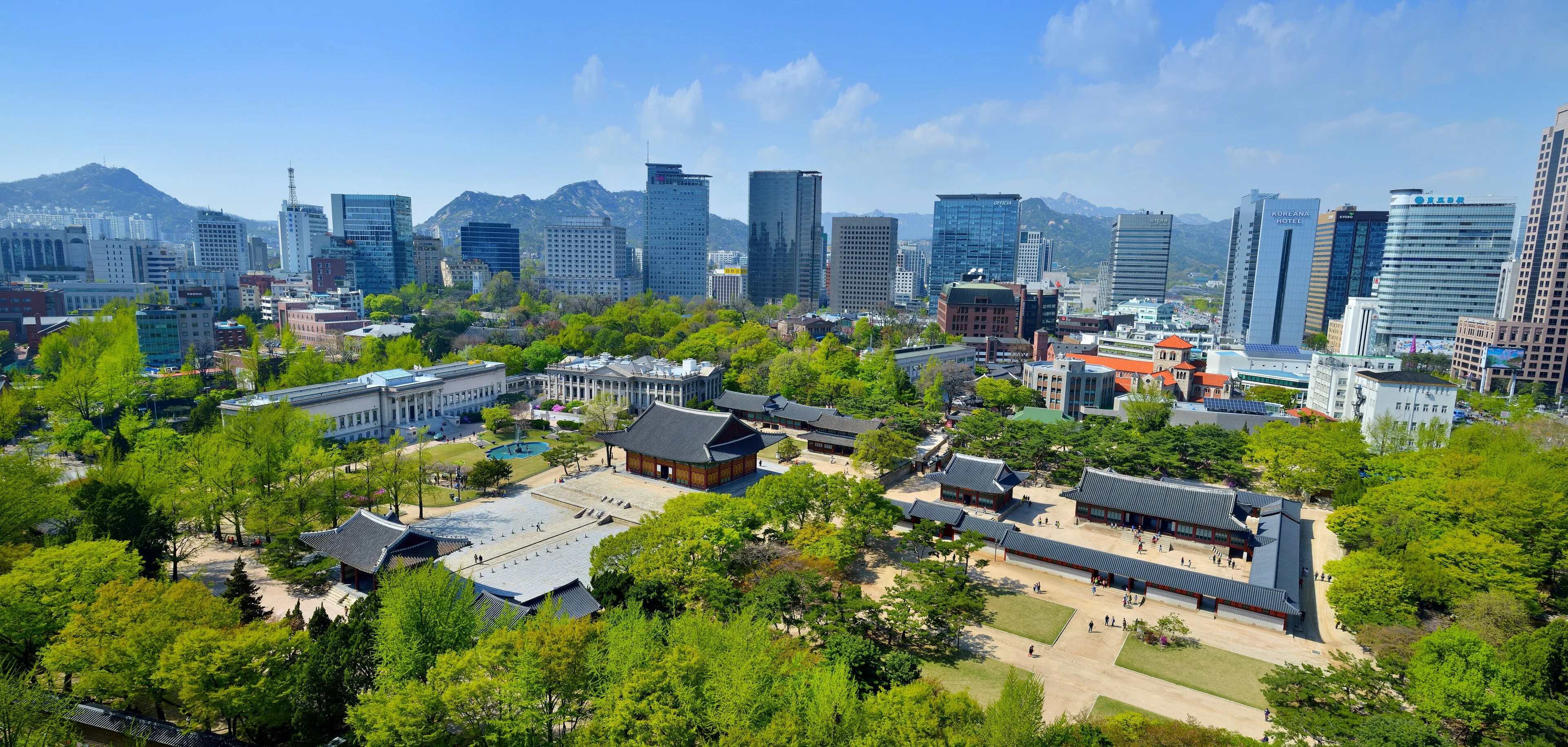
Deoksugung Palace at 99 Sejong-daero in Jung-gu is the palace closest to the central Seoul hotel cluster and the most accessible royal visit for travellers based in the Myeongdong, City Hall, or Gwanghwamun areas. The palace expanded substantially under Emperor Gojong in the late 1890s and early 1900s and uniquely incorporates Western-style buildings — most notably the neoclassical Seokjojeon stone hall — alongside the traditional Korean throne hall and residential pavilions, which makes the palace architecturally distinct from the other four. Admission is 1,000 won, which is the lowest standard palace fee. The royal guard changing ceremony at the front gate is performed three times daily, at 11:00, 14:00, and 15:30. Hours run 09:00 to 21:00, with closure on Mondays. English, Japanese, and Mandarin signage is documented across the grounds, and the palace stone-wall promenade along the western side is one of the most-photographed urban heritage walks in central Seoul. Deoksugung is the right first-palace pick for travellers who have only a half-day window or who are walking from the Westin Josun, the Lotte Hotel Seoul, or the Plaza Hotel cluster.
Featured D — Changgyeonggung Palace (Jongno-gu)
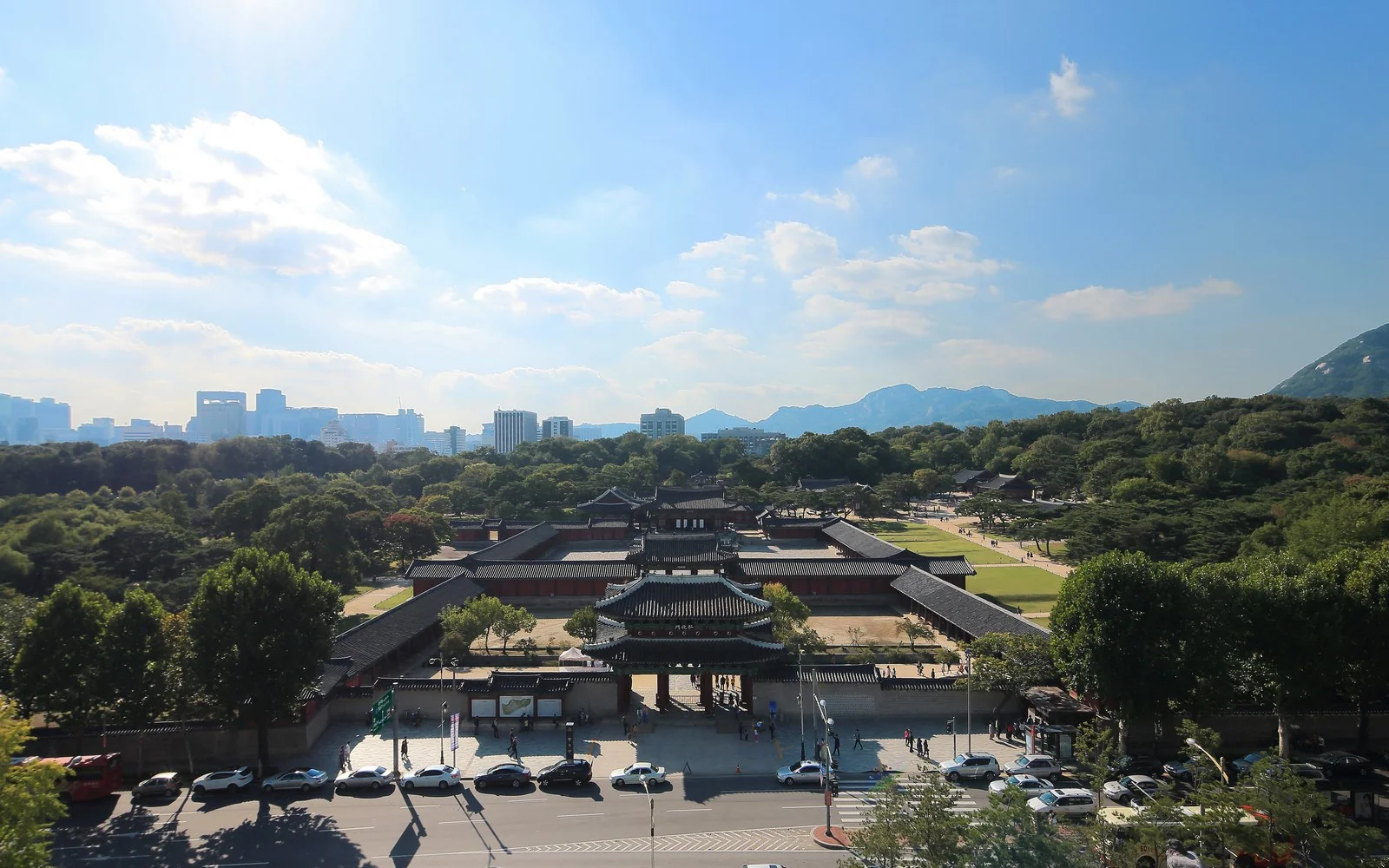
Changgyeonggung Palace at 185 Changgyeonggung-ro in Jongno-gu is the quieter sister palace to Changdeokgung and is connected to it directly through the Hamyangmun gate, which means a combined two-palace visit on a single ticket is the standard practice that the Cultural Heritage Administration documents in its itinerary materials. Historically the palace functioned as the queen-mother's residence and the women's palace within the dynastic system. Admission is 1,000 won. Hours run 09:00 to 21:00 with closure on Mondays. The palace is particularly atmospheric in autumn, when the Chundangji pond reflects the surrounding foliage, and the late-summer-to-autumn window is the editorial recommendation across Korea Tourism Organization seasonal coverage. Changgyeonggung does not feature the daily guard ceremony of Gyeongbokgung or Deoksugung, which makes the visit functionally a quieter walk rather than a spectacle. The Changdeokgung-Changgyeonggung pair, taken together, is the standard half-day option for visitors who have already seen Gyeongbokgung and want the heritage circuit's deeper interior.
Featured E — Jongmyo Royal Shrine (Jongno-gu)
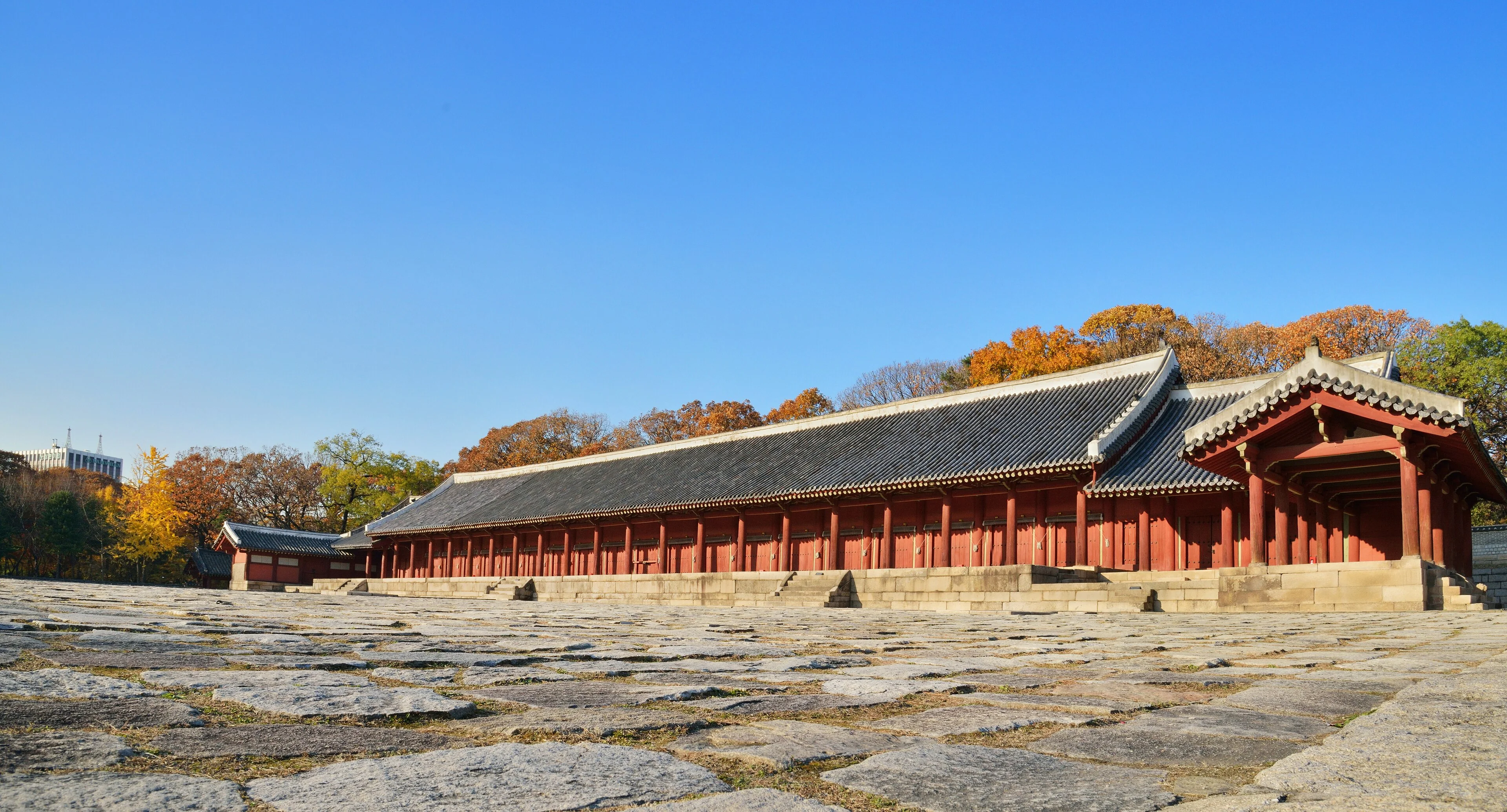
Jongmyo at 157 Jong-ro in Jongno-gu is the Confucian royal shrine of the Joseon dynasty, inscribed on the UNESCO World Heritage list in 1995 — the earliest Korean inscription, two years before Changdeokgung — and the heritage site where the ancestral tablets of the Joseon kings and queens are housed. The shrine is structurally austere by deliberate Confucian design: long horizontal halls (Jeongjeon and Yeongnyeongjeon), a stone-paved courtyard, and a precisely calibrated ritual landscape that the Jongmyo Jerye royal ancestral ritual continues to use to this day. The Jongmyo Jerye, performed annually in early May, is itself inscribed on UNESCO's Representative List of the Intangible Cultural Heritage of Humanity (2001), which makes Jongmyo doubly UNESCO-recognised. Admission is 1,000 won. Most weekdays the shrine is accessible by timed-entry guided tour only; on Saturdays and the final Wednesday of each month, free walking is permitted. English, Japanese, and Mandarin guided tours are scheduled at set times. Hours run 09:00 to 18:00. Jongmyo is the heritage site that completes the dynastic landscape and the visit that visitors most often skip — which is why it is the editorial recommendation for a third Seoul heritage day.
How the five sites compare across UNESCO status, fees, and ceremonial schedule
Categorical positioning across district, admission, ceremonial schedule, and UNESCO status. Not ranked.
| Site | District | Admission | Ceremonial schedule | UNESCO status |
|---|---|---|---|---|
| Gyeongbokgung | Jongno-gu | 3,000 won, free with hanbok | Royal guard changing 10:00 and 14:00 daily | Not inscribed (principal palace) |
| Changdeokgung and Huwon | Jongno-gu | 3,000 won palace, 5,000 won Huwon | Huwon guided tour times posted online | World Heritage 1997 |
| Deoksugung | Jung-gu | 1,000 won | Royal guard changing 11:00, 14:00, 15:30 | Not inscribed |
| Changgyeonggung | Jongno-gu | 1,000 won | No daily ceremony; quieter walk | Not inscribed (Changdeokgung pair) |
| Jongmyo | Jongno-gu | 1,000 won | Guided-tour only most weekdays; free Saturdays and final Wednesday | World Heritage 1995 |
Visit logistics — transit, hanbok, and the standard heritage day
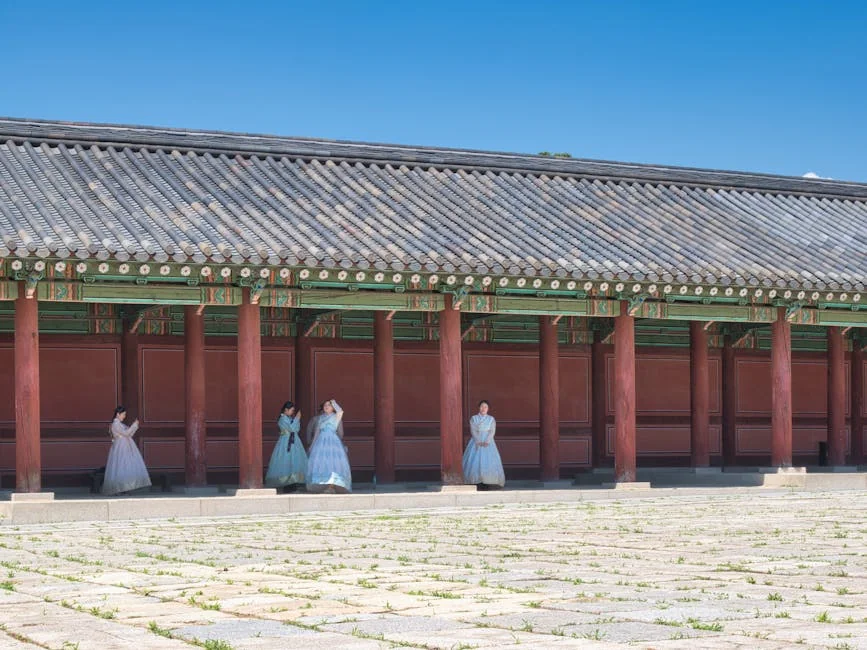
Four of the five sites — Gyeongbokgung, Changdeokgung, Changgyeonggung, and Jongmyo — sit inside Jongno-gu and are reachable from Myeongdong on Subway Line 3 with a single transfer or none at all. Gyeongbokgung is the eponymous Line 3 station; Anguk Station serves both Changdeokgung and Bukchon Hanok Village; Jongno 3-ga Station serves Jongmyo on Lines 1, 3, and 5; and Hyehwa Station on Line 4 is the standard entry for the Changgyeonggung side. Deoksugung sits in Jung-gu and is reached via City Hall Station on Lines 1 and 2. Walking distance between Gyeongbokgung and Changdeokgung is approximately 1.5 kilometres along Yulgok-ro and is the standard editorial walk that the Cultural Heritage Administration and Visit Seoul both recommend. The hanbok rental ecosystem along the Gyeongbokgung and Changdeokgung approach roads — particularly the Samcheong-dong and Bukchon strips — operates on a half-day or full-day basis at standard 15,000 to 35,000 won price bands and serves the documented purpose of free Gyeongbokgung admission for hanbok-wearing visitors. Photography is permitted across the grounds at all five sites; drone photography is restricted at all five and a permit is required from the Cultural Heritage Administration for any official drone use. Audio guides in English, Mandarin, and Japanese are available for rental at the four palace ticket offices and at Jongmyo, with current 2026 rental costs in the 3,000 to 5,000 won range. The standard heritage day across the five sites is a Gyeongbokgung-Bukchon-Changdeokgung loop on day one and a Deoksugung-Changgyeonggung-Jongmyo loop on day two; visitors with a single heritage day typically weight the trip toward Gyeongbokgung in the morning and Changdeokgung Huwon in the afternoon, with the Huwon tour booked in advance through the Royal Palaces and Tombs Centre online portal.
- Subway Line 3 anchors the heritage circuit — Gyeongbokgung, Anguk, Jongno 3-ga
- Walking distance Gyeongbokgung to Changdeokgung is about 1.5 kilometres
- Hanbok rental enables free Gyeongbokgung admission; 15,000 to 35,000 won standard
- Audio guides in English, Mandarin, Japanese; 3,000 to 5,000 won rental
- Huwon Secret Garden requires advance booking through the Royal Palaces portal
- Drone photography restricted at all five sites without a permit
Seasonal considerations — when each palace is at its best
The four seasons read meaningfully differently across the five sites and several of the standard heritage moments are explicitly seasonal. Spring (late March through mid-May) is the cherry-blossom window along the Gyeongbokgung outer wall and along the Yulgok-ro corridor between Gyeongbokgung and Changdeokgung; the spring opening of the Changdeokgung Huwon for the full seasonal walk begins in this period. Summer (June through August) is hot and humid; the four palaces remain open under standard hours but the visitor pace slows and the indoor Sajeongjeon and Geunjeongjeon halls at Gyeongbokgung and Changdeokgung become the more comfortable visit options against the heat. Autumn (mid-September through early November) is the optimum heritage season; the Changgyeonggung Chundangji pond reflects the surrounding foliage at its most photographed in late October, and the Jongmyo Jerye royal ancestral ritual, while performed in May, is matched by an autumn ritual window that Korean heritage press has documented under the Cultural Heritage Administration calendar. Winter (December through February) is cold but the palace circuit remains open under reduced hours, and several heritage moments — the snow at the Geunjeongjeon throne hall steps, the bare-branch geometry of the Huwon, and the austere stone-paved courtyards of Jongmyo — read more legibly against the winter light than against any other season. The Korea Tourism Organization publishes a current seasonal travel window each year and the heritage geography aligns with those windows. The implication for trip planning is that visitors with date flexibility should weight the trip toward the late-September-to-late-October window for the best combination of pleasant outdoor pacing and seasonal palace photography.
What the dynastic timeline does for the visit
A short dynastic timeline makes the five sites legible as a single ritual landscape rather than five disconnected stops. The Joseon dynasty was founded by King Taejo in 1392 and Gyeongbokgung was constructed three years later in 1395 as the principal palace of the new capital, then called Hanseong. Changdeokgung followed in 1405 as the secondary east palace, and Jongmyo was constructed in the same founding period to house the ancestral tablets of the dynasty's kings. The 1592 Japanese invasion (the Imjin War) destroyed Gyeongbokgung substantially and shifted the principal-palace function to Changdeokgung for much of the seventeenth century — which is the historical reason Changdeokgung is the best-preserved palace today and why the Huwon rear garden achieved its fully developed form during that period. Changgyeonggung was constructed in 1483 as an expansion of Changdeokgung's grounds and operated thereafter as the queen-mother's palace. Deoksugung was originally a private residence that became a temporary royal palace during the post-Imjin reconstruction period and was substantially expanded under Emperor Gojong in the late 1890s and early 1900s as the dynasty transitioned into the short-lived Korean Empire (1897 to 1910). The 1910 Japanese annexation began a long period of palace damage and demotion under colonial administration that continued until 1945 liberation; the Cultural Heritage Administration restoration cycles that produced the palaces visitors see today began in earnest from the 1990s onward and continue in phased restoration across all five sites. Reading the timeline against the standing buildings is the most useful single thing a visitor can do before the heritage day. The Gwanghwamun gate that fronts Gyeongbokgung was itself restored to its 1395 original positioning in a Cultural Heritage Administration project completed in 2010, and the National Folk Museum of Korea inside the Gyeongbokgung grounds offers the most accessible English-language introduction to the dynastic timeline.
Pairing the heritage circuit with the rest of a Seoul trip
The Gyeongbokgung-Changdeokgung-Bukchon axis is the standard editorial heritage day in Seoul, and the Bukchon Hanok Village (37 Gyedong-gil) sits midway between the two palaces on the same Subway Line 3 corridor. The Insadong shopping street and the Anguk antique-craft district sit on the same axis and are the standard afternoon extension. The Jongno-gu palace cluster pairs naturally with the Euljiro Hipjiro cafe geography one or two subway stops south, which means a heritage morning, a Hipjiro afternoon, and an evening at Gwangjang Market for traditional Korean street food is a documented and frequently recommended Seoul day. Visitors arriving from a Mapo-gu coffee morning at Coffee Libre or Anthracite Hapjeong can complete the loop into Jongno via Subway Line 2 to Line 3 at Euljiro 3-ga, which is the most common transit pattern in the Visit Seoul itinerary materials. The separate Specialty Coffee editorial on this site covers the Mapo and Apgujeong cafe geographies in detail; the cafe and heritage routes are designed to connect across a single Seoul trip rather than compete for the same days. For travellers who are flying into Korea on a longer regional itinerary, the heritage circuit pairs cleanly with the Han River park system that runs south of Jongno-gu — a Yeouido or Banpo Park evening after a heritage day completes the standard editorial Seoul template that the Korea Tourism Organization, Visit Seoul, and Time Out Seoul all recommend across their current itinerary coverage.
“Five sites, two UNESCO inscriptions, one Subway Line 3, and the better part of six centuries of Joseon ritual landscape. The Seoul royal circuit is denser than the equivalent in almost any other Asian capital, and the editorial mistake travellers most often make is trying to see all five in one day instead of weighting the trip toward three.”
Korea Aesthetic Wire editorial note, May 2026
Frequently asked questions
Which of the five sites are UNESCO World Heritage?
Two of the five are inscribed on the UNESCO World Heritage list. Changdeokgung Palace and its rear garden Huwon were inscribed in 1997 under the World Heritage Centre's Korean cultural-property criteria, in recognition of the palace as the best-preserved of the Joseon royal palaces and the most refined surviving example of Korean palatial-garden composition. Jongmyo Royal Shrine was inscribed in 1995 — the earliest Korean inscription, two years ahead of Changdeokgung — in recognition of the shrine as the most complete surviving Confucian royal-ancestral ritual landscape in East Asia. The Jongmyo Jerye royal ancestral ritual carries an additional 2001 UNESCO Intangible Cultural Heritage inscription, which makes Jongmyo doubly UNESCO-recognised. Both inscriptions are documented on the UNESCO World Heritage Centre's Korean inscription list and are cited consistently in Cultural Heritage Administration materials.
Which palace should I visit first if I only have one heritage day?
Gyeongbokgung is the most internationally recognised heritage building in Korea and the standard first-palace pick for a single heritage day. The 10:00 royal guard changing ceremony anchors a morning visit and the National Folk Museum of Korea on the palace grounds extends the visit into the early afternoon. The standard editorial pattern is Gyeongbokgung in the morning, Bukchon Hanok Village in the midday, and Changdeokgung Huwon in the afternoon — the three together cover the heritage core in a single subway-and-walking day.
Do I really need to pre-book the Changdeokgung Huwon tour?
Yes, in practice. The Changdeokgung Huwon (Secret Garden) is accessible by guided tour only and tour times are posted online through the Royal Palaces and Tombs Centre portal. The English-language tour slots fill in advance during the peak spring and autumn windows and walk-up availability is limited. The portal accepts international card payment and the 5,000 won Huwon ticket is separate from the 3,000 won standard Changdeokgung palace ticket. For visitors travelling in October or April, advance booking at least one to two weeks ahead is the standard recommendation.
What is the hanbok rental free admission and how does it work?
Visitors wearing hanbok (traditional Korean dress) enter Gyeongbokgung free of charge, which has produced a documented rental-hanbok ecosystem along the palace approach roads, particularly in the Samcheong-dong and Bukchon strips. Rental operates on a half-day or full-day basis at 15,000 to 35,000 won standard price bands. The free admission policy is Gyeongbokgung-specific; the other four sites charge their standard 1,000 to 3,000 won admission regardless of attire. The hanbok rental industry is regulated under the Cultural Heritage Administration and Visit Seoul guidance.
When is Jongmyo accessible without a guided tour?
Jongmyo is accessible by timed-entry guided tour only on most weekdays, in keeping with the Confucian ritual character of the shrine. Free walking access is permitted on Saturdays year-round and on the final Wednesday of each month. The 1,000 won admission applies in both cases. English, Japanese, and Mandarin guided tours are scheduled at set times across the weekday operating window and the schedule is posted on the Royal Palaces and Tombs Centre online portal. The Saturday free-walking option is the easier slot for visitors who are not on a guided itinerary.
Is Deoksugung worth a visit if I have already seen Gyeongbokgung?
Yes, and on a meaningfully different basis. Deoksugung uniquely combines traditional Korean and Western-style architecture, including the neoclassical Seokjojeon stone hall that was expanded under Emperor Gojong in the late 1890s and early 1900s. The palace also sits closest to the central Seoul hotel cluster (the Westin Josun, the Lotte Hotel Seoul, the Plaza Hotel) and the stone-wall promenade along its western side is one of the most-photographed urban heritage walks in central Seoul. The three-times-daily royal guard changing at 11:00, 14:00, and 15:30 is more accessible than the Gyeongbokgung schedule.
Can I combine Changdeokgung and Changgyeonggung in a single visit?
Yes, and this is the standard practice that the Cultural Heritage Administration itself documents. The two palaces are physically connected through the Hamyangmun gate and a combined ticket is available. Changdeokgung is the UNESCO World Heritage palace with the famous Huwon rear garden; Changgyeonggung is the quieter sister palace that historically functioned as the queen-mother's residence and is particularly atmospheric in autumn around the Chundangji pond. A half-day combined visit, anchored on the morning Huwon tour and an afternoon Changgyeonggung walk, is the standard editorial pattern.
How do drone photography and tripod rules work at the palaces?
Drone photography is restricted at all five sites without an advance permit from the Cultural Heritage Administration of Korea, and standard recreational drone use is not permitted across the grounds. Tripod photography is generally permitted in open courtyard areas but may be restricted around active ritual spaces, particularly inside the Jongmyo shrine halls and within the Huwon guided-tour route at Changdeokgung. The standard professional-photography permit application route is through the Cultural Heritage Administration online portal and requires advance documentation.